
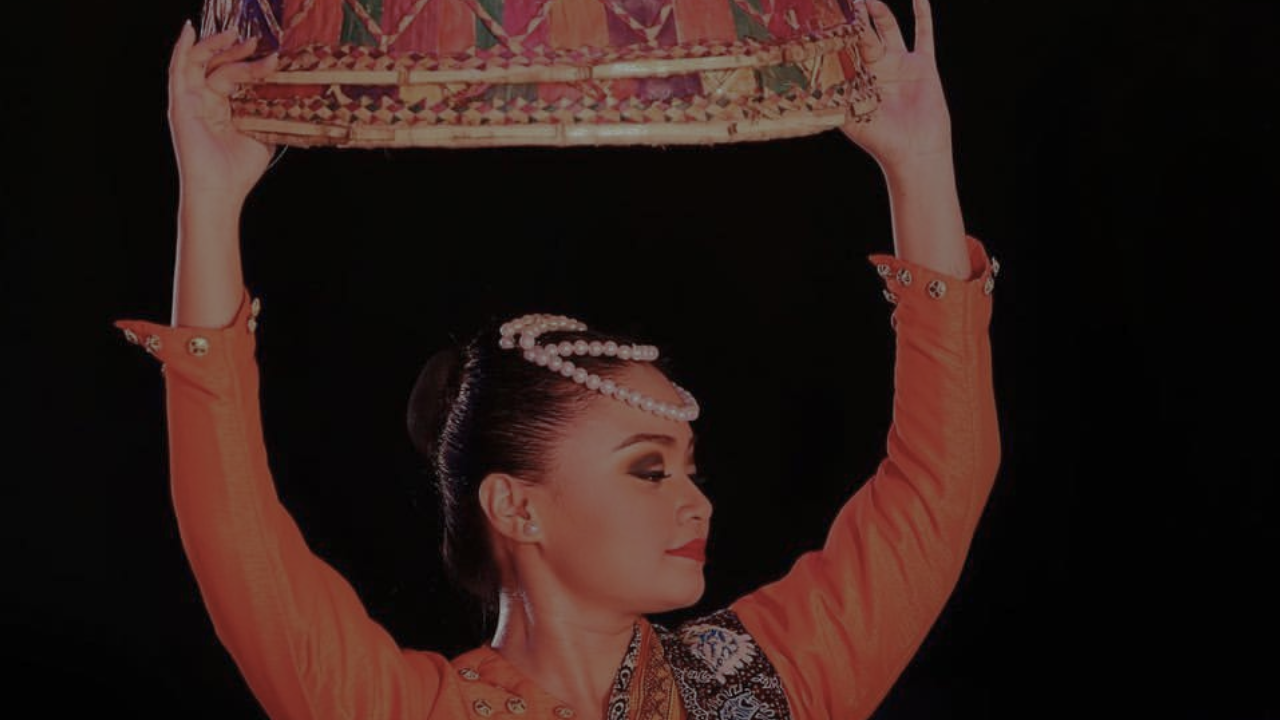
Women don’t just perform on stages, they build them, too.
Bayanihan: Women, the Nation, and Togetherness
Dr. Helena Z. Benitez founded the Bayanihan Folk Dance Group of the Philippine Women’s University in 1956. Just a year later, it expanded into the Bayanihan Folk Arts Center, with the Bayanihan Philippine Dance Company serving as its performing arm and sharing the nation’s intangible cultural heritage around the world. It was institutionalized as the Philippines’ National Folk Dance Company through the enactment of RA 8626 in 1998. Behind the curtains, and behind the concert posters over the past decades were women at the heart of Manila working in the arts towards nation-building. They weren’t idle group members, they were researchers, athletes, and choreographers. They planned for props and traditional attires. They released songs (which are actually available on Spotify). They put in hours of training, smiled for audiences, and later, they brought the Philippines to the world. Until now, their work persists. Children take folk dance workshops and perform at recitals, Bayanihan continues to showcase Philippine dances overseas, and even their vintage posters pop up as design inspiration on Pinterest. To us, we see “Bayanihan” in that iconic font and picture people lifting a kubo. However, first-timers looking up this native term could imagine something rawer, yet truer: togetherness towards a shared goal. Bayanihan is not possible without the women behind it. Bayanihan is not possible without women.
Bayanihan is not possible without the women behind it. Bayanihan is not possible without women.
The University of the Philippines Filipiniana Dance Group is a varsity performing arts group that brings folk and modern jazz dances to both cultural showcases and competitive scenes. Filipiniana was also founded by a woman–Francisca Reyes-Aquino, lovingly remembered as “Lola Kikay”, the first National Artist for Dance and Mother of Philippine Folk Dance. Through her love and passion for Philippine dance, Filipiniana started as the UP Folk Song and Dance Club and the Philippine Folk Dance Society. Not only did Reyes-Aquino ensure that Philippine folk song and dance would be practiced for more generations to come, as a scholar, she also brought national dances and folk traditions into academic spaces. Do we think about these women when we think of trailblazers, pioneers, or inventors? Do we realize that so many women work behind the curtains, integrating care into labor? Women aren’t just muses or spectacles. They’re founders, choreographers, and leaders. Before the Bayanihan Folk Dance Group became the Philippines’ National Folk Dance Company, it was formed by women. Before Filipiniana became the national university’s varsity cultural dance group, it was one woman’s passion-turned-action. And the quest to preserve culture isn’t just a ‘passion project’. It’s a legacy that we see everywhere (online, in performances) yet fail to connect to the hard work that women have put in together as a collective. Culture doesn’t preserve itself. It’s transformed and kept alive by women. So the next time you see a performance, steer clear of viewing girls and women as spectacles that exist just to be watched. Instead, see them.
Related articles section -->